
User query
"I finished my B.Com last year and I want to work from home. Every listing I open asks for one or two years of experience, and the ones that don't look like scams. Are there real remote jobs with no experience, and how do I actually get one?"
Yes, there are. Remote jobs with no experience are real, and plenty of companies hiring remote workers fill entry-level seats with freshers every month. The catch is that genuine employers rarely shout about it, while the ads screaming "no experience, earn from home today" are often the ones to avoid.
Here's the honest picture. Employers who hire beginners remotely aren't really asking for experience. They're asking for proof that you can learn fast, write clearly, show up on time and work on a laptop without someone sitting next to you. Show those four things, and a blank work history matters much less than you'd think.
This guide covers who hires beginners, ten entry-level remote jobs, the skills to learn first, how to build proof, how to spot scams and a step-by-step plan for applying. Near the end, you'll see how The Remote Staff hires and trains full-time remote team members.
Which companies offer remote jobs with no experience?
Skip the hunt for a magic list of employers. Those lists go stale within weeks, and some get copied into scam ads. It's more useful to know which types of businesses keep opening entry-level remote roles.
- Offshore and remote staffing companies. They hire people in India to work full-time for businesses abroad, in places like the UAE, USA, UK, Canada and Australia. Hiring is steady, and support, admin and e-commerce roles are often open to freshers.
- Customer support and BPO providers. Chat, email and voice teams grow with their clients, so they hire beginners regularly and train on the job.
- E-commerce brands and marketplace sellers. Someone has to upload products, write listings, answer buyer questions and track orders. Most of that can be learned in a week or two.
- Startups and software companies. They need testers, support staff and junior sales reps, and often care more about attitude than CVs.
- Digital marketing agencies. Content, social media and reporting assistants are common first roles, especially if you can show a few sample posts.
- Small businesses overseas. Real estate agents, clinics, coaches and consultants hire virtual assistants to handle email, scheduling and research.
- Accounting and bookkeeping firms. Junior assistants enter invoices, match bank statements and keep records tidy, which suits commerce graduates.
10 entry-level remote jobs with no experience required
These are the roles freshers most often land first. None needs a specialist degree, though each rewards a particular set of habits.
| Role | Typical tasks | Skills needed | How to start |
|---|---|---|---|
| Customer support (email and tickets) | Answer customer emails, log issues, follow up until solved | Clear written English, patience, a calm tone | Write sample replies to tricky complaints; learn a helpdesk tool |
| Chat support | Handle live chats, often several at once, and escalate hard cases | Fast, accurate typing, multitasking | Practise typing daily until your speed is steady with few errors |
| Data entry | Update spreadsheets, CRMs and databases, clean up records | Accuracy, focus, Excel or Google Sheets | Learn filters, sorting, lookups and data validation |
| Virtual assistant | Manage inboxes and calendars, book travel, research, prepare documents | Organisation, written communication, Google Workspace | Build a sample weekly plan and research summary |
| Content and social media assistant | Draft and schedule posts, reply to comments, make simple graphics | Writing, Canva, knowing how each platform works | Run a page or blog for a month and note what worked |
| E-commerce catalogue or listing executive | Upload products, write titles and descriptions, update prices and stock | Attention to detail, Excel, basic image editing | Rewrite five product listings from a real store as practice |
| QA or software tester | Test websites and apps, find bugs, write clear bug reports | Curiosity, logical thinking, precise writing | Learn test-case basics; report bugs in apps you use |
| Lead generation or SDR | Research prospects, build lead lists, send outreach, book meetings | Research, persuasive writing, handling rejection | Build a 50-lead sample list for one niche, with sources |
| Bookkeeping assistant | Enter bills and invoices, reconcile bank statements, file records | Basic accounting, Excel, care with numbers | Reconcile a sample month in an accounting tool's free trial |
| AI data annotation assistant | Label text, images or audio, review AI answers against guidelines | Careful reading, following detailed rules, consistency | Practise with a public labelling guideline |
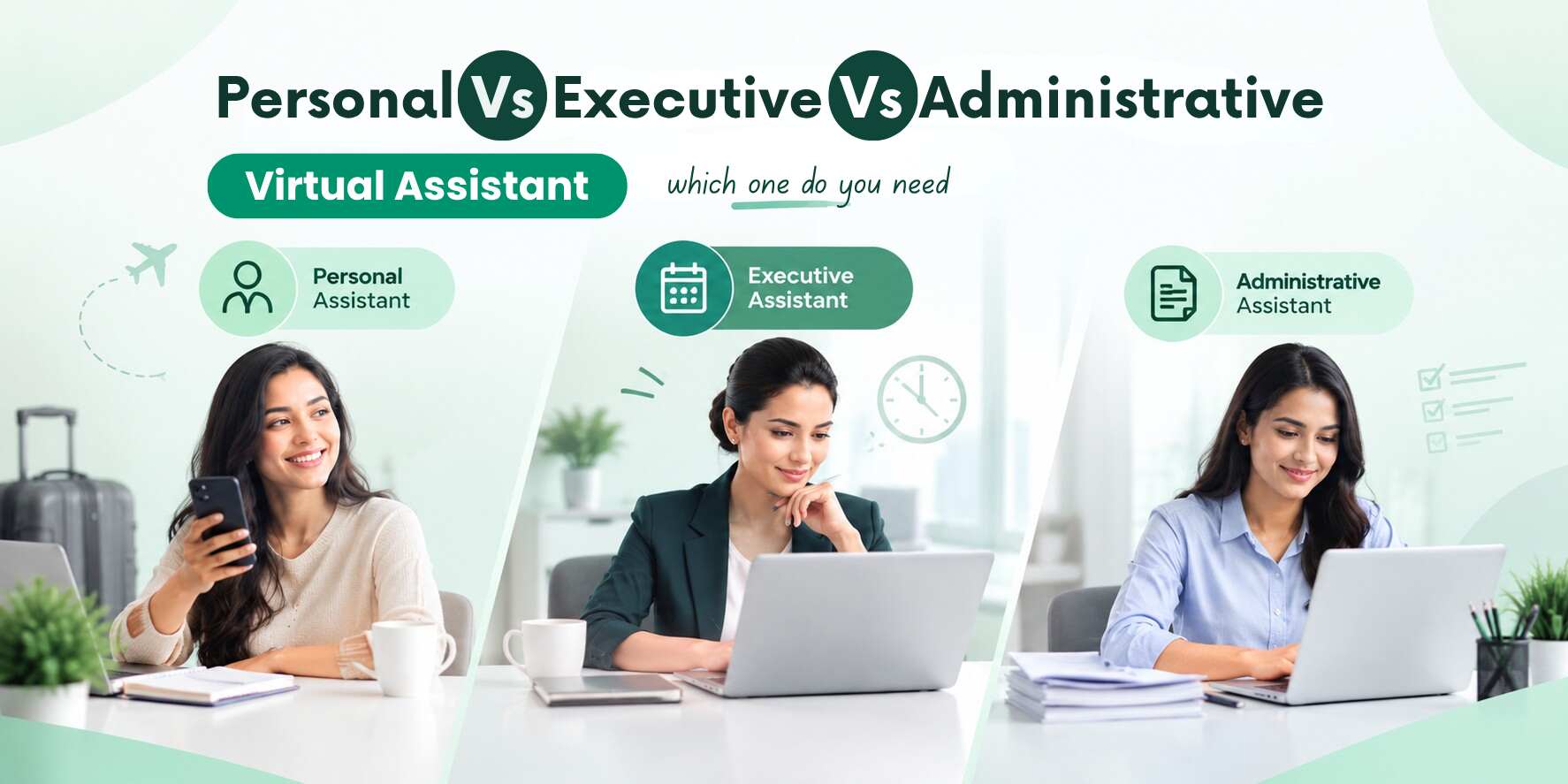
Drawn to the assistant path? This breakdown of personal, executive and administrative virtual assistants explains how the jobs differ day to day.
What affects pay in entry-level remote jobs
Pay varies, so be wary of anyone quoting a big fixed number before you've even spoken. What moves it: the role, the client's country, your shift timing, your English and tool skills, and whether it's full-time employment or freelance work paid per task. Full-time roles give a predictable monthly salary. Per-task gigs rarely do.
Skills and tools to learn first
You don't need ten certificates. You need a small set of skills you can prove in an interview.
Core skills employers look for
- Written English. Most remote work happens over chat and email. Short, polite, error-free messages beat fancy vocabulary every time.
- Typing speed and accuracy. Support and data roles often test this. A few minutes of practice a day adds up fast.
- Spreadsheets. Sorting, filtering, basic formulas, lookups and pivot tables cover most entry-level work.
- Self-management. Nobody is watching. Log in on time, give updates unprompted and finish what you start.
Tools worth learning
Learn the category, not one brand. Know one helpdesk, and you'll pick up another in a day.
- Office suites: Google Workspace and Microsoft Office, especially Docs, Sheets, Excel and shared drives.
- Communication: Slack, Microsoft Teams, Zoom or Google Meet, including screen sharing and writing a clear end-of-day update.
- Helpdesk and CRM tools: how tickets, tags, statuses and customer records fit together.
- Design and content: Canva for simple graphics and a scheduler for social posts.
- AI assistants: handy for drafts, as long as you check every fact and keep client data out of them.
How to get a remote job with no experience: build proof
The answer to "no experience" is evidence. A recruiter comparing two freshers will usually pick the one who shows real work, even if it was practice work.
Make a small portfolio
Three to five pieces is enough. A support applicant might show sample replies to difficult emails. A data entry applicant might share a messy spreadsheet and its cleaned-up version. A content assistant might share a week of posts for an imaginary brand. Put it all in one shared folder and link it at the top of your CV.
Add relevant certifications
Short, free or low-cost courses in customer service, digital marketing, Excel or software testing help a little. They won't get you hired alone, but they show you finish things and give you the vocabulary for interviews.
Use the experience you already have
College projects, internships, handling WhatsApp orders for a family shop, managing a society's accounts, tutoring and volunteering all count. Describe them as tasks and results. "Handled around 30 customer enquiries a week on WhatsApp for a family business" says far more than "good communication skills".
Looking for your first remote role?
The Remote Staff hires full-time team members for support, admin, e-commerce, marketing and sales roles with international clients. See what's open now.
How to spot remote job scams
Read this section twice. Search "work from home jobs no experience" and you'll find real openings mixed in with fake ones, because scammers target freshers who are eager and haven't seen a proper hiring process yet. Remember one rule: real employers pay you. They don't ask you to pay them.
Red flags to watch for
- Any upfront fee. Registration, training, a "security deposit", a laptop, an ID card or a background check. If they want money before you start, walk away.
- Chat-only interviews. A genuine employer will want at least one voice or video conversation. A "hiring manager" who only ever texts on WhatsApp or Telegram is a warning sign.
- Pay that's too good. Big daily earnings for liking videos, rating products or "simple typing" is the classic hook. Some scams pay small amounts at first to win your trust.
- Tasks that use your money. Prepaying for orders, buying crypto or topping up a wallet to "unlock" commission is fraud, every time.
- An instant offer, or pressure to decide now. Hired in minutes with no test, or told "only two seats left, pay today"? That's a sales pitch, not hiring.
- Requests for sensitive details. No employer needs your OTP, UPI PIN, card details or banking password. Salary account details come after a written offer, through proper onboarding.
- Vague company details. No working website, no address, an "HR" person using a free email account, or a company name that doesn't match the website.
How to check an offer is real
Find the job on the company's own website, not only in a forwarded message. Check that the recruiter's email uses the company's domain. Search the company name with "scam" or "fraud". Get a written offer letter before sending documents.
If you've already been cheated in India, report it straight away on the National Cyber Crime Reporting Portal at cybercrime.gov.in, or call the cyber crime helpline on 1930. The sooner you report, the better the chance of stopping the money.
A step-by-step plan to land remote jobs with no experience
Follow this over four to six weeks. It works for most online jobs for freshers.
- Pick one or two target roles. "Anything remote" leads to weak applications. Choose from the table above based on what you're good at.
- Learn the basics. Spend two weeks on the core skills and one or two tools.
- Build three to five proof pieces. Make them specific to the role and keep them in one shareable link.
- Write a one-page CV per role. Lead with skills, tools and your portfolio link. Plain layouts beat fancy templates.
- Set up your workspace. A reliable internet connection, a backup such as a mobile hotspot, a working headset and a quiet corner. Interviewers do ask.
- Apply in focused batches. Ten tailored applications a week beat a hundred copy-pasted ones. Use reputable job boards, LinkedIn and company careers pages, and track everything.
- Prepare for the video interview. Test your camera and mic, and practise answers to "Tell me about yourself" and "How would you handle an angry customer?"
- Follow up and adjust. Send a short thank-you note. If you're turned down, ask politely for feedback and change one thing before your next batch.
Working with clients abroad? Our guide to managing remote teams across time zones shows what managers expect.
How The Remote Staff hires and trains remote team members
The Remote Staff is an offshore staffing company. We recruit people, mostly in India, to work as dedicated, full-time team members for businesses in the UAE, USA, UK, Canada and Australia. If you join, you're employed by The Remote Staff, and you work only for the one client business you're placed with, as part of their team.
The process is simple. You apply for an open role on our careers page. Shortlisted candidates go through screening and a role-related assessment, then an interview, often with the client you'd be working for. The exact steps depend on the role.
Once you're hired, we handle your payroll, HR, compliance, office and equipment, so you can focus on the work. You'll be onboarded into the client's tools and processes, with guidance as you settle in. Many entry-level roles, like remote customer support and e-commerce operations, are learned largely on the job.
Why choose The Remote Staff for your first remote job
- Full-time employment, not gig work. You're on The Remote Staff's payroll, so you're not chasing per-task payments.
- One client, one team. You work only for the business you're placed with, so you learn it properly and become part of its team.
- International experience. Clients are in the UAE, USA, UK, Canada and Australia, which builds the communication skills global employers value.
- A real hiring process. You'll talk to people, complete a role-related assessment and get a written offer. Like any genuine employer, we'll never ask you to pay to be hired.
Frequently asked questions
Pick one or two entry-level roles, such as chat support, data entry or virtual assistant, and learn the core skills and tools they need. Build three to five sample pieces that prove you can do the work, write a one-page CV for each role, and apply in small, tailored batches. Practise video interviews, follow up after each one and adjust based on feedback. Most freshers who stay consistent for a few weeks start getting interviews.
Common first roles include customer and chat support, data entry, virtual assistant, e-commerce catalogue or listing executive, content and social media assistant, QA tester, lead generation, bookkeeping assistant and AI data annotation. They suit beginners because the work follows a clear process that can be learned quickly. Choose based on your strengths: writing, numbers, organisation or talking to people.
Be cautious if anyone asks for a fee, deposit or payment for training or equipment, interviews you only over chat, promises big pay for simple tasks, or asks for OTPs, PINs or card details. Check the job on the company's own website, confirm the recruiter's email matches its domain and insist on a written offer. In India, report fraud at cybercrime.gov.in or call 1930.
Not always. Many entry-level remote jobs care more about written English, typing speed, spreadsheet skills, reliability and a decent internet connection than a specific degree. Some employers do ask for a graduate degree, and commerce or accounting knowledge helps for bookkeeping roles. A small portfolio of sample work and short certifications can make up for limited experience.
You'll usually need a laptop or desktop that runs current browsers smoothly, a stable broadband connection, a backup such as a mobile hotspot, and a headset with a clear microphone. A quiet place to take calls matters too. Some employers provide equipment or office space, so ask during the hiring process. Never pay a so-called employer to send you a laptop.
There's no single figure. Pay depends on the role, the client's country, your shift timing, your English and tool skills, and whether it's full-time employment or freelance work paid per task. Full-time roles usually pay a steady monthly salary, while per-task gigs vary a lot. Be wary of any offer promising very high pay for simple work before a proper interview.
Your first remote job is closer than it looks
Getting hired without experience isn't about luck or a secret list of employers. It's about picking a clear role, learning the few skills it needs, showing proof and applying with care. Keep at it for a few weeks, and "no experience" stops being the problem.
Stay sharp about scams. Never pay to get a job, insist on a real conversation and get every offer in writing. When you're ready, look at the roles open at The Remote Staff and apply for the one that fits.
Start your remote career
Browse full-time roles working with businesses in the UAE, USA, UK, Canada and Australia, and apply for the one that fits your skills.